AI Trading Copilot
LIVEA copy-trading bot plus an AI risk officer, wrapped in a multi-tenant SaaS—and a strategy sentenced to death by its own data.
A copy-trading bot plus an AI risk officer: follow Solana smart money into positions, have AI vet each trade before buying, and wrap the whole thing in a multi-tenant SaaS.
What this is
It watches a group of high-caliber wallets on-chain. The moment they buy, a signal goes through rule checks (amount, token safety, wallet score), then AI scoring; only S-tier and H-tier signals trigger automatic orders. After entry, the engine sweeps each position every five seconds: stop loss, trailing take profit, intraday loss circuit breaker, and rug (zeroed pool) detection. On top of that sits login, workspace, billing, and a platform fee ledger.
What problem it solves
Manual monitoring is too slow; by the time you see it, the early price is gone. Pure automated copy-trading is too reckless—every wallet move triggers an order. What's missing in between is a review layer and a unified risk-control system.
Use cases, and what it taught me
After it had been running for a while, I ran a diagnostic: three star wallets made more than 1,100 trades in seven days; my system received zero signals. The listener was attached to a door they never walked through. Digging deeper: the wallet score's 100% win rate was fake (it only counted the winners among closed positions). What I was actually following were snipers, and I was buying at 80 to 100 times their cost. Conclusion: in a market where 97% of participants lose money, being on the buy side is a structural disadvantage. The whole strategy was sentenced to death by its own data.
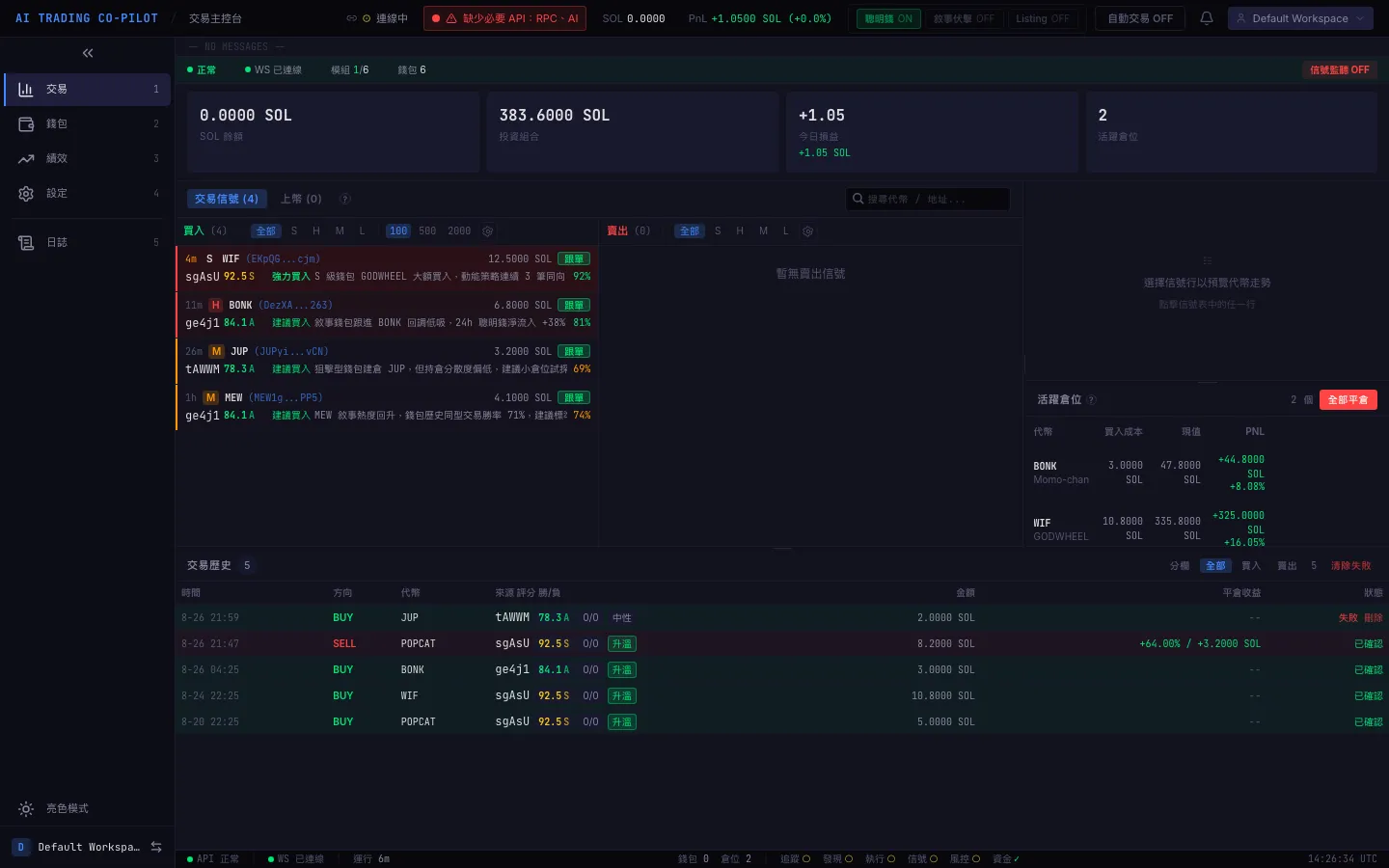
Trading dashboard (demo data)
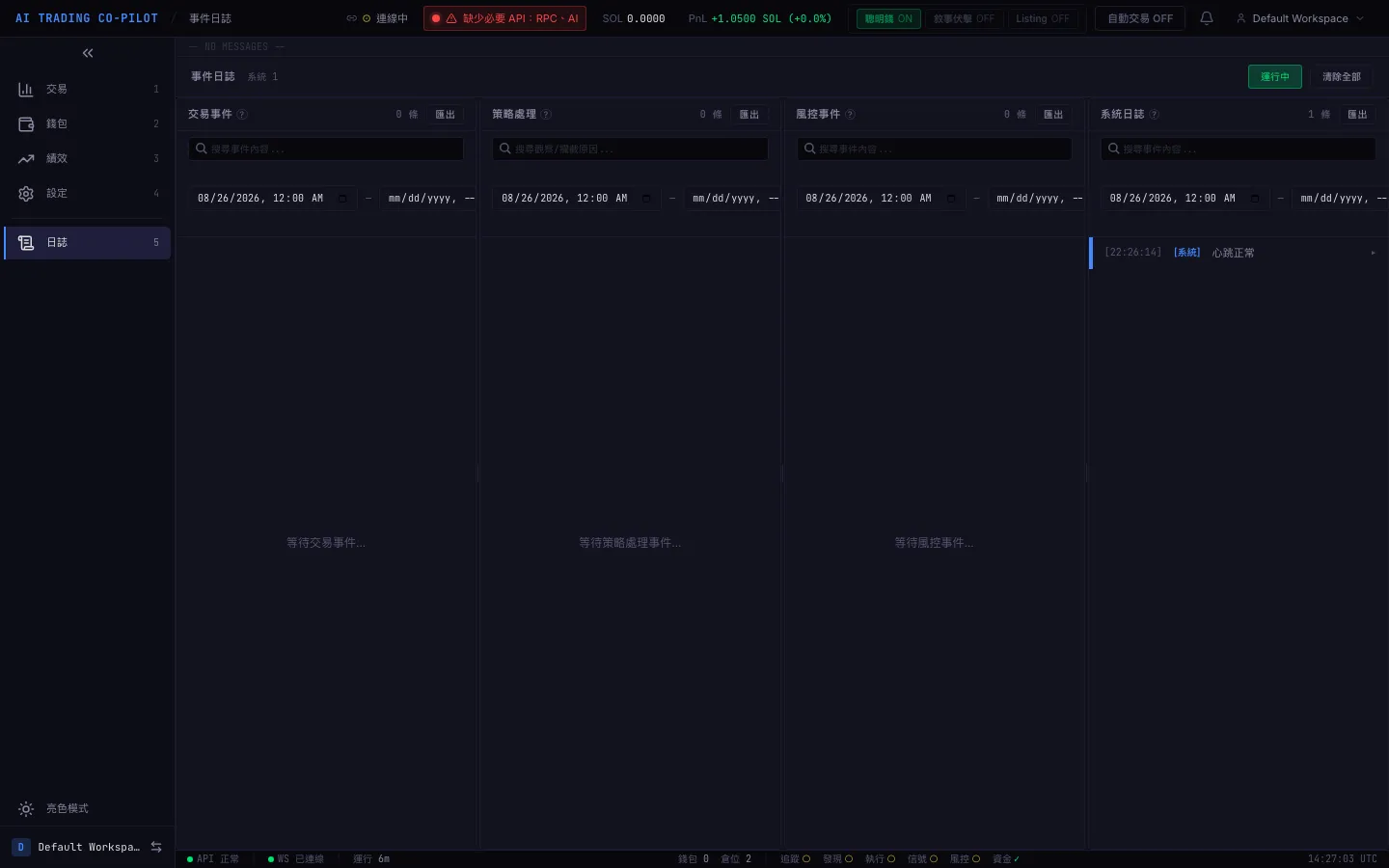
Event log (demo data): the table that can only be appended to, never modified
Highlights
- Permissions enforced in the backend: billing and treasury data are trimmed by permission in the backend, not by hiding buttons in the frontend.
- Every money movement leaves a trail: treasury writes land in an append-only audit table—who, when, what changed, and transaction hash—replayable.
- Tests organized into five layers with contracts: 2,144 tests; run whichever layer the change touches.
Where it is now
37 days, 312 commits, stopped in April 2026. It was not launched and will not be launched; the spec explicitly states it does not promise profit. What remains is the skeleton and the lesson: what decides wins and losses is the framework and risk control outside the model, and AI should not make per-trade buy/sell rulings. Four months later, AlphaTerm took that sentence as its first principle. The demo site's data is all simulated.