AI Has Turned Video Production Into a Matter of Pennies — Where Did the Expensive Work Go?
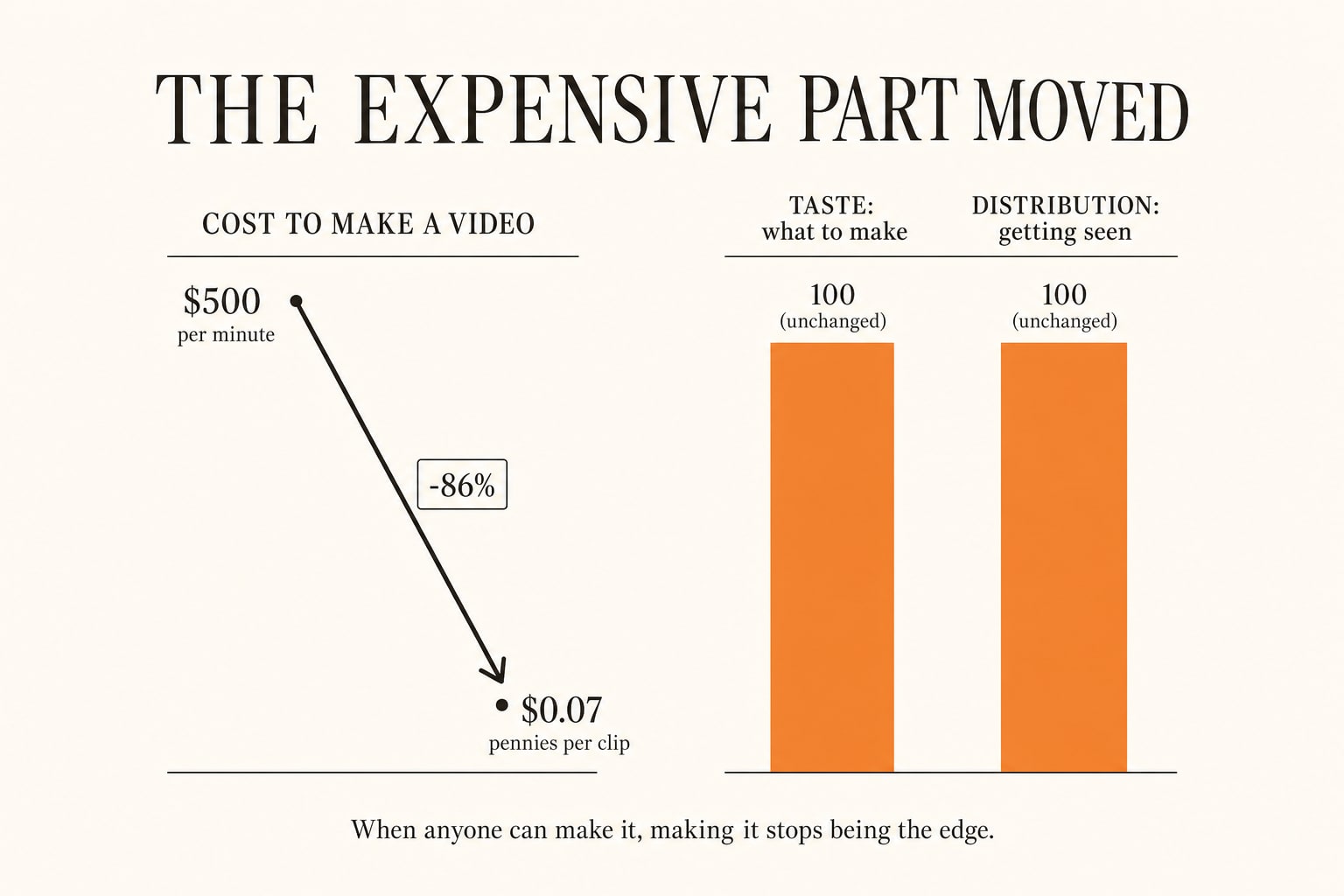
Last week xAI pushed the price of AI video generation to the floor (officially about 86% lower than Sora 2 Pro, with voiceover built in). When making a video costs pennies, being able to make one is no longer an advantage — the expensive work has quietly shifted elsewhere.
Last week xAI officially opened its video generation model, Grok Imagine Video 1.5, to everyone (June 16). The company’s own published numbers are striking: it ranks first on a video generation leaderboard called Image-to-Video Arena (where real people blindly judge which video is better, and the results are turned into scores and rankings), is about 86% cheaper than OpenAI’s Sora 2 Pro, and the voiceover is generated together with the visuals, so there is no need to add it separately.
Put the official self-promotion aside; what’s actually worth pausing on is the trend itself. A year ago, generating a decent short video with sound using AI was either expensive or meant stitching together several tools yourself (first generate the visuals, then the voiceover, then lip-sync). Now it is collapsing into a trivial “pennies, done in one step” kind of task.
For someone who doesn’t write code, the interesting part has nothing to do with technology. The point is: a step that used to cost money and time is becoming nearly free. A 60-second marketing video used to mean hiring a team and paying by the day; now one person can batch out a dozen or more candidates in an afternoon. I felt this myself when building loomerce, my automated e-commerce system: generating short product videos went from “needs scheduling, needs budget” to “just click it on the way through.”
Here’s the problem. When “making a video” becomes so cheap it’s nearly free, it stops being your edge, because your competitors, their interns, and the owner of the bubble tea shop downstairs can all make one just as cheaply. There is a plain economic rule at work: once something can be made by everyone, its price falls toward its cost, and where the money is made moves elsewhere.
So where did the expensive work go? It moved to two places that machines can’t quite handle yet.
The first is “knowing what to make.” The model can generate a hundred videos for you in an afternoon, but it doesn’t know what your customers were complaining about yesterday, doesn’t know which line will make someone stop scrolling, and doesn’t know that your brand can only talk like a real person and never fake it. The judgment to say “which three of these hundred are worth publishing, and why” is known in the trade as taste (here, the eye for judging what’s good). This price cut hasn’t touched it one bit. When output grows a hundredfold, the eye for choosing becomes more valuable, because there is also a hundred times more to choose from.
The second is “getting it seen.” A finished video is only the starting point. Whether it gets surfaced to the right people, whether they are willing to watch it through, and whether they act afterward — this whole system is called distribution (the ability to get content in front of the target audience, built on channels, account weight, and publishing cadence). AI has pushed the production side to the floor, but it hasn’t won you a single extra second of attention. When everyone can produce ten times more content, the total attention from platforms and audiences doesn’t grow with it, so the attention each piece can get is actually thinner.
So what this price cut is really doing is moving the battleground up one level. People used to compete on “can you make a video?” Now that threshold is basically gone, and the competition becomes “do you have something worth saying, and do you have a channel to get it out?” For a business owner or founder, that means budgets and energy should be reallocated: stop agonizing over “can we afford to make videos?” That problem is already solved. What deserves attention now is building a channel that can keep reaching users, and keeping someone around who can judge “what content is worth making.”
This is also a fixed routine I use when watching round after round of AI tool updates: whenever a new tool appears, first ask “which part of the workflow did it make cheaper?” and then immediately ask “what should the people who used to make money from that part rely on now?” The headlines will answer the first question for you. The second you have to think through yourself, and the answer is usually the half that’s actually worth money.
Price cuts are a good thing. They put the power to make things into more people’s hands, and that is genuine progress. Just remember: when something becomes doable by anyone, whether you can do it no longer says anything about you. What remains is whether you’ve thought clearly about what to make — and whether anyone will watch.