No Audience Farming, Just Building Work: My One-Person Company Operating System
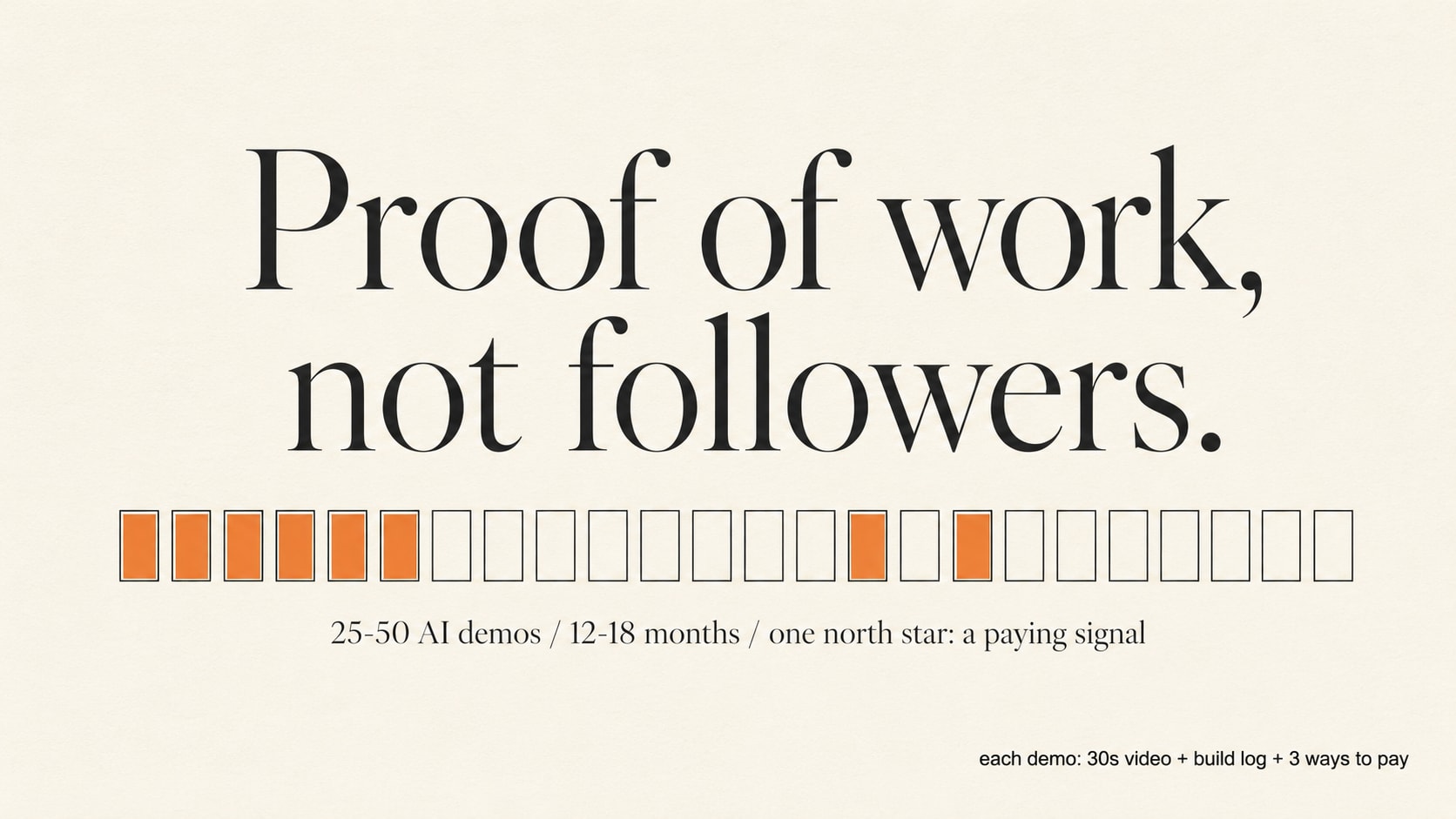
Build 25–50 small AI apps in 12–18 months, each with a 30-second demo, a process write-up, and monetization entry points. Build trust through real work, and let the case library naturally surface the direction worth going all-in on.
I'm an independent developer. I've tried building with partners, competed in hackathons, and explored crypto tools — in May 2026, I overturned all those paths, set one main direction, and gave it a name: AI Application Cookbook.
The plan is simple: build 25 to 50 small AI apps in 12 to 18 months. Each demo solves a specific problem and comes with a 30-second demo video, a process write-up, and three monetization entry points — self-serve use, SaaS subscription, and commissioned customization.
Behind this are a few principles I've thought through.
Proof of work, not audience farming. Trust should be built on real work. Every demo has a built-in distribution hook and doesn't depend on audience size. The case library itself is brand equity — the website you're reading right now is its display layer.
Breadth before depth (first 12 months). Don't bet on a single direction; use dozens of small apps to probe the market, and let paying signals tell me where real demand is. There's only one North Star metric: whether a demo triggers a real paying signal — someone asks about pricing, books, or reaches out proactively. Once that appears, stop making new demos and go all-in on that one.
Looking at the market comes before heads-down coding. Before building any demo, I have to do cold-start validation and confirm demand exists. I've learned the hard way from "just build it first" — the more polished it gets, the more painful the sunk cost.
Rhythm over perfection. Shipping fast at 80 is better than delaying for 100.
Software is a probe; the moat is outside the demo. The software layer of any demo will be flattened by general-purpose large models within five months — that's not a bug, it's a feature. So before greenlighting any demo, I have to answer: if it produces a paying signal, what non-software asset can it deepen into? Vertical community, case library, category judgment, brand, proprietary data — if I can't answer, I don't do the project.
Psychological stability before short-term cash flow. Creativity is the only capital of a one-person company; if the rhythm breaks, everything breaks. That's why independence, remote work, and self-selected projects aren't indulgent — they're the infrastructure of this business.
The biggest risk of a one-person company isn't lack of income; it's consuming yourself into someone who no longer wants to create.
This site will keep recording the process of every demo — decisions, execution, results, including failures. If any piece of work makes you want to talk, feel free to reach out anytime.