Take It Slow, Go Faster
In a society famed for efficiency, patience has become a scarce resource. We are all slaves to instant gratification, yet we overlook the beautiful things that need time to mature.
I often think of the story of two brothers: Saul and Charlie. Saul roughly ripped the tape off the wall in one yank, ignoring the damage to the wall; Charlie patiently rolled the tape off bit by bit, leaving the wall intact. These two ways of doing things reflect two attitudes toward life.
Success is moving forward one step at a time, steadily and surely.
I have to admit, I used to find it hard to listen patiently, always eager to voice my opinions; I couldn't wait patiently for people to show up and became easily anxious; I picked up hobbies only in fits and starts; and I was easily drawn away from studying by other things.
In a society known for efficiency, patience seems to have become a scarce resource. We are all slaves to instant gratification: we chase quick satisfaction, crave immediate responses, and feel disappointed whenever short-term positive feedback is missing—while overlooking the beautiful things that need time to settle.
Games and short videos use instant feedback and randomness to stimulate hormones, pulling us easily into a "flow" state while quietly raising the threshold for joy, making genuinely meaningful and valuable things less likely to interest us.
By the way, labeling people is also a sign of impatience. Using labels to quickly define someone saves us from thinking, but it also forfeits the chance to discover something beautiful in getting to know them. Worse, it breeds a type of person skilled at exploiting labels—people who make their halo far larger than their actual ability. The former are lazy and foolish, easily deceived; the latter are mostly bad, ready to deceive.
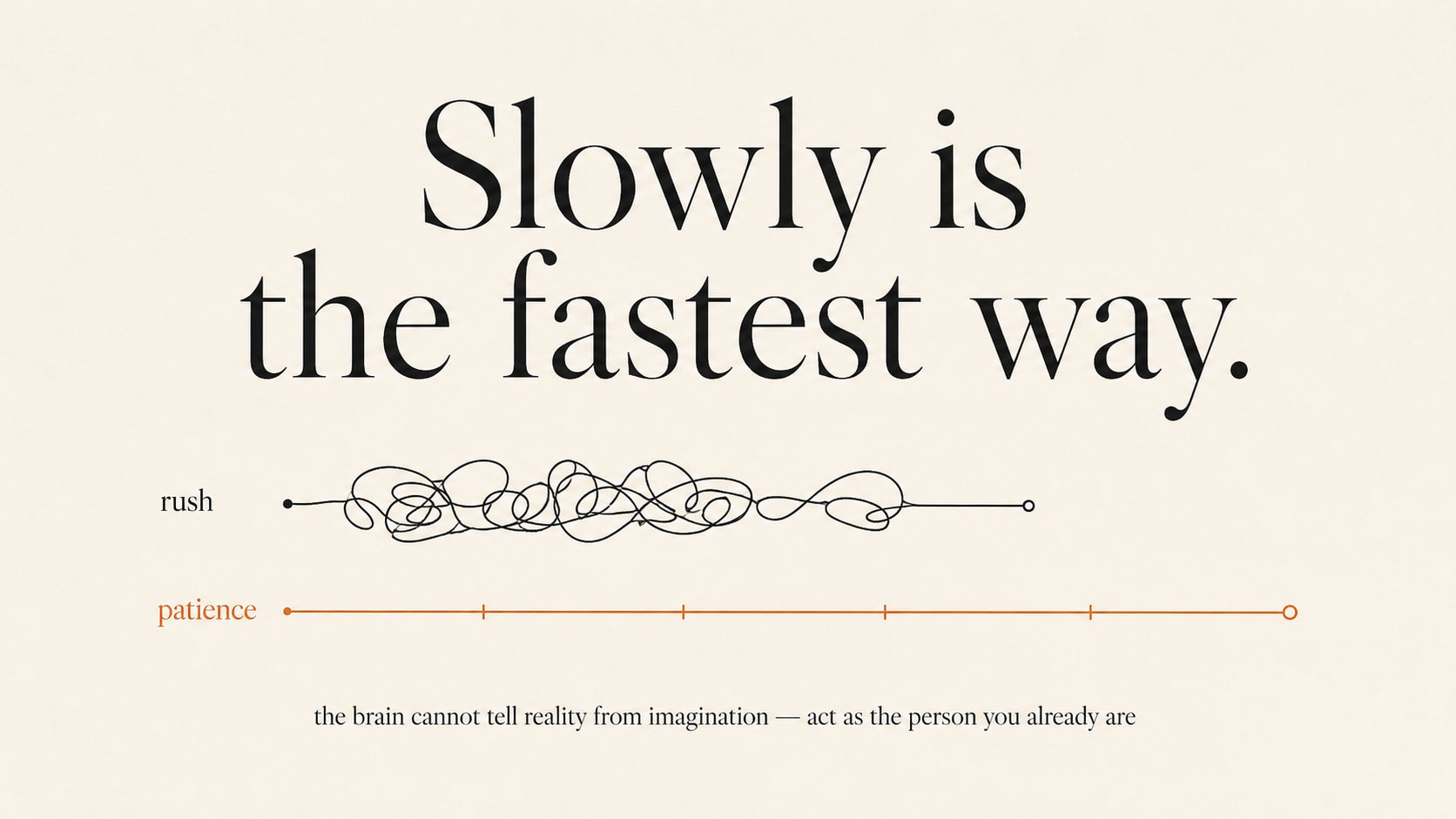
The secret of this world is actually simple: our brains cannot tell reality from imagination. To build a good habit, you only need to keep telling yourself—I am already that kind of person, and enjoy it.
Take it slow, and you'll go faster.
This seemingly contradictory sentence reminds me that patience is not just a passive state of waiting, but an active practice, a profound inner construction, and above all the attitude of a long-termist.