For Small Things, Act First and Reflect Later; for Big Things, Reflect First and Act Later
Rushing for results means acting before conditions are ripe, and the outcome is predictable. But not everything is worth thinking through three times before acting—otherwise, life would be exhausting.
When I first entered the working world, I had always thought of myself as a realist and believed I had formed a coherent knowledge system. In reality, it shattered at the first blow. Lacking experience and judgment, I often acted on intuition and assumed things should naturally be as I imagined—and the specific symptom was rushing for results.
A relaxed, pleasant conversation would be disrupted by a sudden "purposefulness"; a promising project would be driven onto the highway before I had learned to drive, and would veer into a dead end.
Rushing for results means acting when conditions are not yet ripe, and it leads to foreseeable, almost inevitable failure. Repeated experience has proven: the better prepared you are, the closer you are to success. Such an obvious truth was obscured by youthful recklessness, and I even used "even if I fail, I still gain experience" as a comforting remedy.
In fact, all action is determined by cognition. Cognition comes from experience and impression: experience is formed through repeated practice and review—the richer your experience, the sharper your intuition; impression comes from reading and hearing about things, and when opportunities for hands-on practice are limited, you can only draw on the experience of others as a guide.
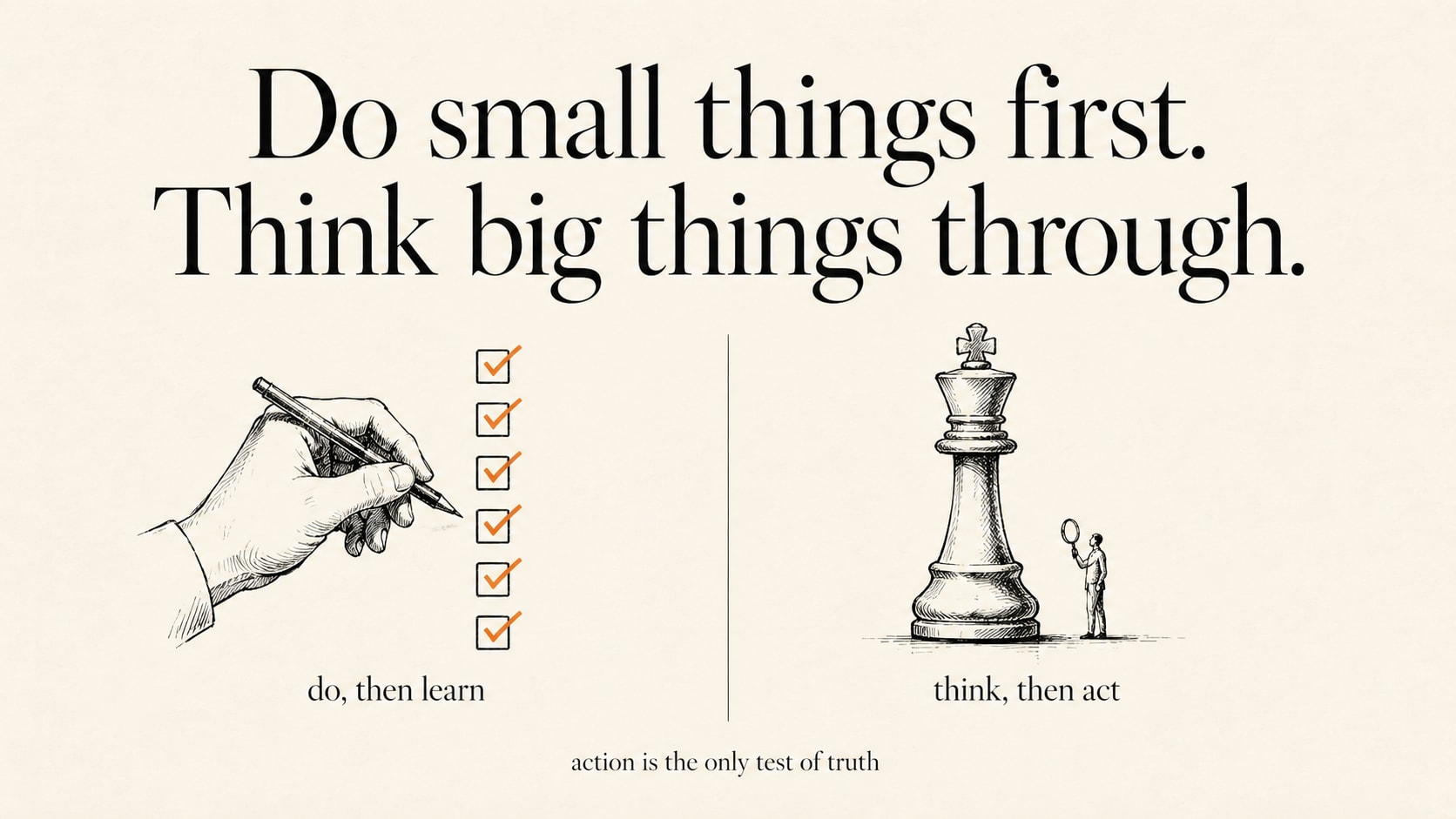
But not everything requires thinking three times before acting—life would be exhausting otherwise. So it comes down to one sentence:
For small things, act first and reflect later; for big things, reflect first and act later.
Sometimes I even wonder whether reading can be a form of escape. It is excellent mental nourishment, but to avoid the trap of feeling good about yourself, you need not only to read often but also to put things into action—action is the only means of testing truth.
Finally, we should maintain reverence for knowledge. In this era of fragmented information, we suffer from information overload while unknowingly trapped in information cocoons. Every day, we absorb a flood of attention-grabbing headlines and learn a bit of "practical know-how" that has been chewed over by others a thousand times, creating the illusion that we understand everything. When someone nearby raises a topic, the complacent thought "I already knew that" arises—and with it, the door to deeper discussion and reflection quietly closes.